


Jumping rope is often overlooked as a simple childhood activity, but it’s actually one of the most efficient and effective exercises for overall fitness. Research has shown that just 10 minutes of jump roping a day can deliver the same cardiovascular benefits as 30 minutes of jogging.
This comprehensive guide will explore why jump roping deserves the title of “best exercise” and how it can transform your fitness routine. Whether you’re a beginner or an experienced athlete, you’ll discover how to incorporate jump rope exercises into your workout.
Key Takeaways
- Jump roping is an efficient and effective exercise for overall fitness.
- Just 10 minutes of jump roping can deliver the same cardiovascular benefits as 30 minutes of jogging.
- This guide will cover selecting the right rope and mastering advanced techniques.
- Jump rope exercises can be incorporated into any fitness routine.
- You’ll learn how to make jump roping your fitness superpower.
Why Jumping Rope Is a Fitness Game-Changer
With its comprehensive full-body engagement, jumping rope stands out as a superior fitness activity. As stated by fitness experts,
“Jumping rope is one of the most effective ways to improve cardiovascular health, burn calories, and develop muscular endurance.”
This exercise is not just about jumping; it’s a holistic workout that engages multiple muscle groups simultaneously.

Cardiovascular Benefits and Calorie Burning
Jumping rope is an excellent cardiovascular exercise that significantly improves heart health and burns a substantial number of calories. When you jump rope, your heart rate increases, enhancing cardiovascular fitness. This exercise can burn between 700 to over 1,000 calories per hour, depending on intensity and individual factors. Regular jump rope workouts can lead to improved cardiovascular endurance and weight management.
Full-Body Engagement and Muscle Development
Jump roping engages your legs, core, arms, and shoulders, making it an excellent choice for an effective and efficient workout. The exercise promotes full-body engagement, developing strength and endurance across multiple muscle groups. Your legs and calves work to propel you off the ground, while your core stabilizes your body. The rotation of the rope activates your shoulders, biceps, and forearms, enhancing upper body strength. This comprehensive engagement leads to improved coordination and overall athletic performance.
Choosing the Right Jump Rope for Your Fitness Level
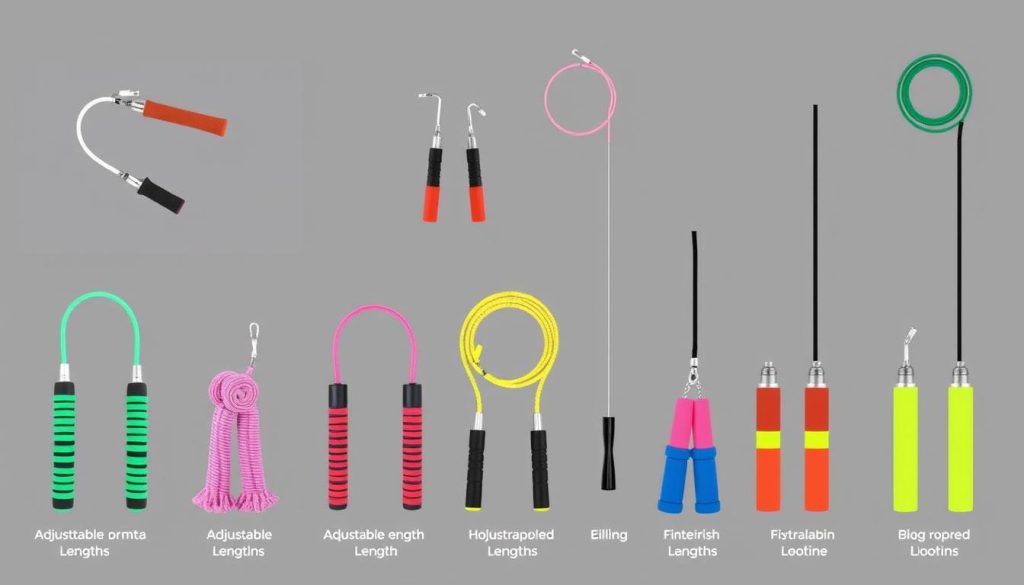
With various jump ropes available, picking the best one for your needs depends on several key factors, including your fitness level and workout goals. The right jump rope can significantly enhance your exercise routine, making it more effective and enjoyable.
Speed Ropes vs. Weighted Ropes
When it comes to jump ropes, two popular options are speed ropes and weighted ropes. Speed ropes are designed for experienced jumpers looking to improve their speed and agility. They are typically made of lightweight materials and have a smooth, quick rotation mechanism. On the other hand, weighted ropes are ideal for those seeking a more challenging workout, as they provide additional resistance to build strength and endurance.
Beaded Ropes and Cordless Options
For beginners, beaded ropes can be an excellent choice due to their ease of handling and visibility. The beads provide a clear visual cue for the rope’s rotation, helping users maintain a consistent rhythm. Alternatively, cordless jump ropes are a great option for those with limited space or coordination issues, as they eliminate the risk of tripping over the rope.
Factors to Consider When Selecting Your First Rope
When choosing your first jump rope, several factors come into play. – Proper rope length is crucial; stand in the center of the rope with both feet and pull the handles up; they should reach approximately armpit height for optimal performance. – Consider the handle design—comfortable, ergonomic handles with good grip will prevent slipping during intense workouts and reduce hand fatigue. – The rope’s material affects its performance: PVC is durable and affordable for beginners, while steel cables offer speed and precision for more advanced jumpers. – Your fitness goals should guide your selection—weight loss goals might be best served by a weighted rope, while speed and agility training calls for a lightweight speed rope. – Consider your jumping surface—concrete requires more durable ropes, while gym floors allow for various rope types without concern for damage. – Budget is also important—quality jump ropes range from $15 for basic models to $100+ for premium adjustable systems with interchangeable weights. – For beginners, a moderately priced adjustable rope ($20-30) offers versatility as you develop your skills and determine your specific jumping style and preferences.
Mastering Proper Jump Rope Form and Technique
Effective jump roping involves more than just jumping; it requires a harmonious blend of body movement and rope rotation. To achieve this harmony, it’s crucial to understand the different components that make up proper jump rope form and technique.
Correct Posture and Body Alignment
Maintaining the correct posture is vital for efficient and safe jump roping. Keep your head level, shoulders relaxed, and torso upright. This alignment helps in distributing the impact of jumping evenly across your body.
Hand and Arm Positioning
Your hands should be positioned with elbows close to your body, and your forearms should be relaxed. The rope should be controlled by your wrists, with a gentle rotation that doesn’t strain your arms or shoulders.
Foot Placement and Jumping Mechanics
When it comes to jumping, the key is to land on the balls of your feet, not your heels. This reduces the impact on your joints. Keep your jumps low, about ½ to 1 inch off the ground, to minimize the strain. Your ankles should be slightly flexed to act as shock absorbers. Aim for a quiet landing by focusing on soft, controlled movements. As you improve, your jumping efficiency will increase, allowing you to maintain the exercise for longer time periods.

Getting Started: Jump Rope Basics for Beginners
For those new to jump rope, understanding the fundamentals is crucial for a successful and enjoyable experience. Mastering the basics will not only improve your technique but also enhance your overall workout.
Setting Up Your Jump Rope Space
Before you begin, ensure you have enough space to jump rope without any obstacles. A smooth, flat surface is ideal. You don’t need a lot of space, but enough to swing the rope freely. Consider the ceiling height to avoid hitting it with the rope.
Warm-Up Essentials Before Jumping
Warm up your muscles with some light cardio and dynamic stretches. Jumping jacks, leg swings, and arm circles are great ways to prepare your body for the jump rope workout. This reduces the risk of injury and improves performance.
Your First Basic Jump Practice Session
Start with short intervals of 20-30 seconds of jumping followed by 30-60 seconds of rest. Repeat this cycle for 5-10 minutes as you build endurance. Focus on proper form and a consistent rhythm rather than speed. As you get comfortable, you can increase your workout duration and intensity.
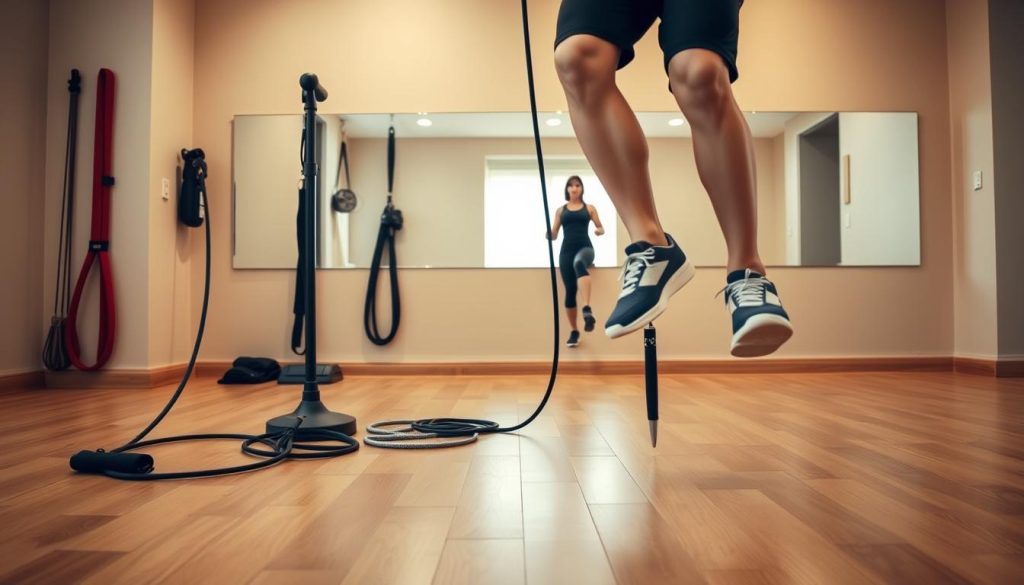
To get the most out of your beginner workout, remember to count your successful jumps and try to increase your streak with each session. Ending your session with gentle stretches for your calves, shoulders, and forearms will help reduce soreness and improve recovery.
Jumping Rope Best Exercise Techniques to Master
Mastering various jumping rope techniques can elevate your workout routine and improve overall fitness. As you become more comfortable with the basic jump, you can introduce new techniques to challenge yourself and avoid plateaus.
The Basic Jump
The basic jump is the foundation of all jump rope exercises. It involves jumping with both feet together, keeping your knees slightly bent, and your weight on the balls of your feet. Focus on maintaining a consistent rhythm and keeping your core engaged.
Alternate Foot Jump
The alternate foot jump mimics running, where you alternate feet with each jump. This technique helps improve coordination and can be less stressful on the joints compared to the basic jump.

Side-to-Side (Ski Jump)
Side-to-Side, also known as the ski jump, involves jumping from side to side over the rope. This technique targets different muscle groups and adds variety to your workout.
High Knees and Boxer Step
For more advanced techniques, high knees and the boxer step can be incorporated. High knees involve lifting your knees toward your chest with each jump, significantly increasing the intensity. The boxer step combines alternate foot jumping with lateral movement, mimicking a boxer’s footwork. Both techniques elevate your heart rate and engage your core more intensely.
Start with short bursts of these techniques and gradually increase the duration as your fitness improves. Incorporating these techniques into your workout routine will enhance your overall fitness and make your jump rope sessions more engaging.
Beginner-Friendly Jump Rope Workout Routines
The key to mastering jump rope lies in starting with simple, effective workout routines that gradually increase in intensity and complexity. As a beginner, it’s essential to focus on building endurance and technique.

5-Minute Basic Jump Workout
Starting with a 5-minute basic jump workout is an excellent way to introduce your body to the exercise. This routine involves jumping at a moderate pace for 30 seconds, followed by 30 seconds of rest. Repeat this cycle for the full 5 minutes.
10-Minute Alternating Technique Workout
Once you’re comfortable with the basic jump, you can progress to a 10-minute alternating technique workout. This involves alternating between basic jumps and alternate foot jumps every minute, with 30 seconds of rest in between.
The 14-Day Jump Rope Challenge for Beginners
For those looking to take their jump rope skills to the next level, the 14-day jump rope challenge is an excellent option. This structured program progressively builds your jump rope skills and endurance.
- This challenge includes a variety of workouts, starting with basic jump technique and gradually introducing new footwork steps and techniques.
- Days 1-3 focus on basic jump technique with 5-minute sessions.
- Days 4-7 introduce alternate foot jumping and increase workout duration to 7 minutes.
- By the end of the 14 days, you’ll be able to complete a 15-minute mixed-technique workout.
By following this challenge, beginners can build a strong foundation in jump rope and set themselves up for continued success.
Intermediate Jump Rope Workouts to Build Endurance
Intermediate jump rope workouts are designed to push your endurance and agility to new heights. As you master the basics, it’s time to challenge yourself with more complex routines that combine technique, strength, and cardiovascular training.
The Jack and Squat Circuit
The Jack and Squat Circuit is a dynamic workout that targets your cardiovascular system and leg strength. This circuit involves alternating between jumping jacks and squats, creating a comprehensive lower-body training session.
- Start with 30 seconds of jumping jacks
- Follow with 30 seconds of bodyweight squats
- Repeat for 15-20 minutes, resting when needed
Tabata-Style Jump Rope Intervals
Tabata-style rope workouts involve short bursts of high-intensity jumping followed by brief rest periods. This protocol is excellent for improving cardiovascular endurance and increasing caloric burn.
- Jump rope at maximum intensity for 20 seconds
- Rest for 10 seconds
- Repeat for 4-6 minutes
Combining Jump Rope with Bodyweight Exercises
For a full-body workout, combine jump rope with bodyweight exercises. The AMRAP (As Many Rounds As Possible) protocol is particularly effective: set a timer for 20 minutes and complete as many rounds as possible of the following sequence:
- 50 basic jumps
- 15 push-ups
- 30 alternate foot jumps
- 20 mountain climbers per leg
- 20 side-to-side jumps
- 15 bodyweight squats
This combination training not only enhances cardiovascular endurance but also improves muscular endurance and core stability. By tracking the number of complete rounds over time, you can measure your progress and stay motivated.
Advanced Jump Rope HIIT Workouts for Maximum Results
For those looking to push their limits, advanced jump rope HIIT workouts provide an intense and rewarding training experience. These high-intensity interval training (HIIT) workouts leverage the efficiency of jump rope exercises to deliver maximum results in minimal time.
Advanced jump rope workouts are not just about speed; they’re about incorporating complex techniques and challenging variations into your routine. This not only keeps your workouts interesting but also ensures that you’re continually challenging your body and avoiding plateaus.
The Fighter Workout
The Fighter Workout is a high-intensity routine that mimics the training regimens of professional boxers. It involves alternating between intense jump rope intervals and strength training exercises, creating a comprehensive full-body workout.
- 30 seconds of high-intensity jump roping
- 30 seconds of burpees
- 30 seconds of jump roping
- 30 seconds of mountain climbers
Skipmaggedon Intense Circuit
Skipmaggedon is an intense circuit that pushes your endurance to the limit. It involves a series of jump rope exercises performed in rapid succession with minimal rest in between.
Example Circuit:
- 3 minutes of double unders
- 1 minute of side-to-side jumps
- 3 minutes of double unders
- 1 minute of high knees
Double Unders and Advanced Techniques
Double unders are a significant milestone in jump rope proficiency, requiring precise timing and coordination. To master double unders, start by inserting single attempts between sets of regular jumps, gradually increasing the number of consecutive double unders as your skill improves.
Beyond double unders, advanced jumpers can explore other challenging techniques such as triple unders, cross-overs, and side swings. Incorporating these advanced techniques into your HIIT workouts creates an extremely efficient training method that continues to challenge even elite athletes.
Preventing Injuries and Optimizing Recovery
To get the most out of your jump rope workout, it’s crucial to prioritize injury prevention and recovery techniques. This involves a combination of proper preparation, correct technique, and post-workout care.
Proper Footwear and Surface Considerations
Choosing the right footwear and training surface can significantly reduce the risk of injury. Wear shoes that provide adequate cushioning and support for high-impact activities. Train on surfaces that are forgiving, such as wooden floors or rubber mats, to reduce the impact on your joints.
Common Jump Rope Mistakes to Avoid
Common mistakes include using improper form, jumping too high, or failing to warm up and cool down properly. To avoid these mistakes, focus on maintaining a relaxed posture, jumping just high enough to clear the rope, and incorporating a proper warm-up and cool-down into your routine.
Post-Workout Stretches and Recovery Tips
After your workout, cool down with a slower activity like walking, followed by light stretches. Focus on stretching your calves, hamstrings, quadriceps, and shoulders. Incorporate foam rolling to release tension and improve blood flow. Additionally, hydrate adequately and consider contrast therapy if you experience significant soreness.
- Cool down by walking for 2-3 minutes before stretching.
- Hold each stretch for 20-30 seconds.
- Use foam rolling on calves, quads, and IT bands.
- Hydrate after your workout.
Incorporating Jump Rope into Your Weekly Fitness Routine
A well-structured fitness routine that includes jump rope can lead to remarkable results. To maximize the benefits, it’s crucial to strike a balance between jump rope workouts and other exercises.
Balancing Jump Rope with Other Workouts
When integrating jump rope into your routine, consider your overall fitness goals. You can alternate days between jump rope and other workouts like strength training or cardio exercises. This balance helps prevent overuse and ensures a well-rounded fitness regimen.
Tracking Progress and Setting Jump Rope Goals
Setting specific goals, like mastering the basic jump for 1 minute or completing a 10-minute session, helps track progress. Use a fitness app or journal to record your workouts, noting techniques practiced and personal records achieved. This helps maintain motivation and quantify improvement.
Conclusion: Making Jumping Rope Your Fitness Superpower
The versatility and effectiveness of jump rope workouts make them an unbeatable fitness choice. Jumping rope is more than just a simple exercise; it’s a comprehensive workout that combines cardiovascular benefits, coordination, and strength training. By incorporating jump rope into your routine, you can experience a significant challenge that pushes your limits and yields impressive benefits.
As you’ve learned, jumping rope best exercise isn’t just a claim – it’s a reality backed by its efficiency, effectiveness, and accessibility. Whether you’re a beginner or an elite athlete, jump rope workouts can be tailored to your fitness level, making it an ideal activity for anyone looking to improve their health and performance.