


Are you looking for an effective way to lose weight and tone your body? Look no further than the humble jump rope. Jumping rope is a wonderful way to burn calories and improve your overall fitness.
Not only can you burn more than 10 calories a minute, but you’ll also be strengthening your arms, shoulders, bottom, and legs. The best part? It’s easy to do and can be done almost anywhere with minimal equipment.
Jump rope workouts provide a full-body exercise experience that tones multiple muscle groups simultaneously. This makes it an ideal choice for those looking for an efficient and effective way to lose weight.
Key Takeaways
- Jump rope is an effective tool for weight loss, burning significant calories in a short amount of time.
- It provides a full-body exercise experience, toning multiple muscle groups at once.
- Jump rope workouts are accessible for people of all fitness levels and can be modified to suit individual needs.
- They offer the dual benefits of burning calories while building muscle tone.
- Jump rope workouts are convenient and can be done almost anywhere with minimal equipment.
The Power of Jump Rope for Weight Loss
The jump rope is not just a playground favorite; it’s a potent weight loss tool. Jumping rope incorporates the whole body, making it a comprehensive workout that engages multiple muscle groups simultaneously.
Why Jump Rope Is Effective for Burning Calories
Jump rope is an effective calorie burner. It requires rapid movements that elevate your heart rate quickly, resulting in a high caloric expenditure. The exercise engages your arms, legs, and core, making it a full-body workout that burns calories efficiently.
Full-Body Engagement: More Than Just Cardio
Jumping rope is not just a cardio exercise; it’s a full-body workout that engages multiple muscle groups. You swing the rope with your arms, jump with your legs, and stabilize with your torso. This comprehensive engagement makes jump rope an excellent exercise for overall fitness and muscle toning.
Science Behind Jump Rope Workout Weight Loss
Jump rope exercises have been proven to be an efficient way to lose weight, thanks to the physiological responses they elicit. Jumping rope is excellent for improving your cardiorespiratory fitness. It requires more blood and oxygen to be pumped to working muscles, increasing your heart rate and respiratory rate.

Caloric Burn: How Many Calories Does Jumping Rope Burn?
Jumping rope is a high-intensity exercise that burns a significant number of calories. The exact caloric burn depends on several factors, including the individual’s weight, the intensity of the workout, and the duration. On average, a person can burn between 700 to over 1,000 calories per hour of jumping rope.
The caloric burn associated with jumping rope is comparable to, if not exceeding, that of other high-intensity cardio exercises. This makes it an effective tool for weight loss when combined with a balanced diet.
Metabolic Benefits of High-Intensity Jump Rope Training
High-intensity jump rope training creates an “afterburn effect” (excess post-exercise oxygen consumption or EPOC), continuing to burn calories for hours after the workout ends. It also increases resting metabolic rate, helping the body burn more calories even at rest.
The interval nature of jump rope workouts can be structured to maximize fat burning through metabolic conditioning. Regular jump rope training can improve insulin sensitivity and glucose metabolism, further supporting weight loss efforts.
Getting Started: Essential Equipment and Space Requirements
To get started with jump rope workouts, you’ll need to choose the right rope and identify a suitable space for your workouts. The right equipment and space can make a significant difference in your jumping experience.
Choosing the Right Jump Rope for Your Fitness Level
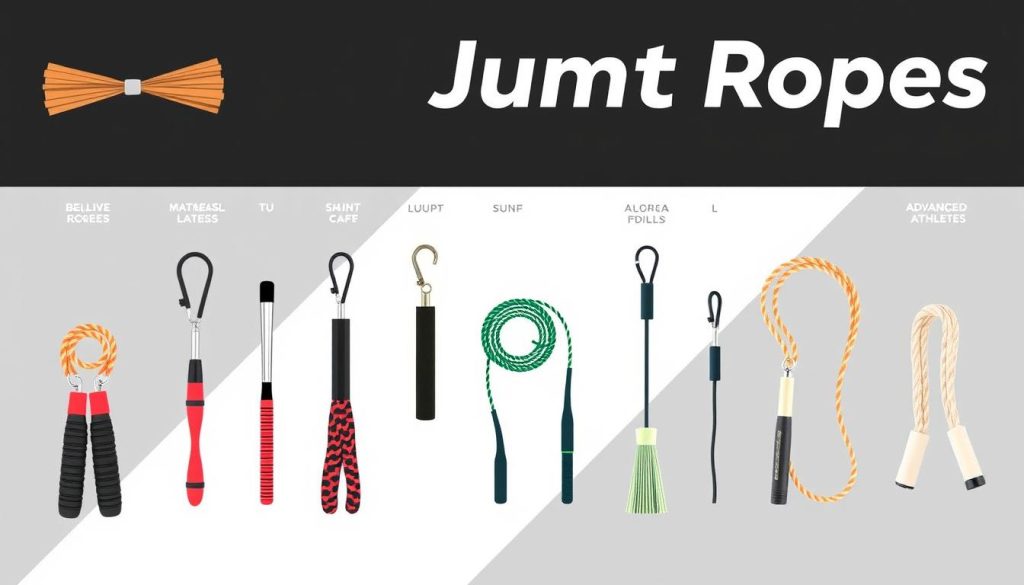
Selecting the best jump rope for weight loss depends on your fitness level and personal preferences. For beginners, a rope with a bit of weight is recommended as it helps in developing the right rhythm. Advanced users might prefer a lighter rope for faster rotations and more complex tricks.
Creating Your Jump Rope Workout Space
You can jump rope both indoors and outdoors, provided you have enough space. When jumping indoors, consider using a jump rope mat to protect your floors and reduce noise. Outdoors, choose a flat, smooth surface. Ensure you have enough ceiling height and lateral space to jump safely.
When it comes to the surface, wooden floors and rubber mats are ideal as they provide a smooth, even terrain. Avoid carpeted or uneven surfaces as they can cause injuries. For outdoor jumping, avoid grass or uneven terrain.
Mastering Proper Jump Rope Technique
Mastering the proper jump rope technique is crucial for an effective workout. To begin, it’s essential to understand the basics of jumping rope and how to execute the movement correctly.
Basic Jump Rope Form for Beginners
To start, stand holding the handles of the rope with the middle of the rope on the floor behind your heels. Swing the rope slowly over your head, and as it approaches your toes, jump over the rope with both feet. Keep your foot landing soft and quiet to reduce impact on your joints.
Common Mistakes to Avoid
When jumping rope, it’s easy to fall into bad habits. One common mistake is jumping too high, which wastes energy and increases the impact on your joints. To avoid this, focus on keeping your jumps low and efficient.
Other mistakes include incorrect arm positioning, such as wide elbows or excessive shoulder movement, and improper wrist action, where you use your arms instead of your wrists to turn the rope. Additionally, be mindful of your foot positioning and posture to avoid strain and maintain effectiveness.
By being aware of these common mistakes and making a conscious effort to correct them, you can improve your jump rope technique and get the most out of your workout.
7 Effective Jump Rope Variations for Weight Loss
By incorporating a range of jump rope variations into your routine, you can challenge yourself, avoid boredom, and maximize your weight loss results. Jump rope workouts are not just about the basic jump; there are numerous techniques that can be employed to keep the exercise interesting and challenging.

Basic Variations: Single Hop and Double Hop
For beginners, starting with the single hop is advisable. This involves jumping over the rope with both feet together, creating a rhythmic motion. As you become more comfortable, you can introduce the double hop, where you jump twice between rope rotations. These basic variations help build foundational endurance and coordination.
Intermediate Variations: High Knee Skip and Low Skip
Once you’re comfortable with basic jumps, you can progress to intermediate variations like the high knee skip and low skip. The high knee skip involves lifting your knees high towards your chest with each jump, engaging your core and improving agility. The low skip, on the other hand, requires you to keep your jumps low and quick, enhancing your speed and footwork.
Advanced Variations: Crossovers, Slalom, and Double Unders
For those looking for a greater challenge, crossovers, slalom, and double unders are excellent options. Crossovers involve alternating between crossing and uncrossing your arms with each jump, which engages your shoulders and core more intensely. Slalom jumping requires you to jump from side to side, improving lateral movement and engaging your thighs. Double unders, where the rope passes under your feet twice per jump, significantly increase the intensity and calorie burn of your workout.
To master these advanced variations, it’s essential to practice progressively. Start by incorporating one new variation into your rope workout at a time. As you become more comfortable, you can combine different techniques to create a dynamic and engaging exercise routine that keeps you motivated and challenged.
For example, you can begin with crossovers, focusing on the coordination required to alternate your arms. Then, introduce slalom jumps to improve your lateral agility. Finally, work on double unders, which require precise timing and powerful jumps. By incorporating these advanced variations into your HIIT (High-Intensity Interval Training) workouts, you can significantly boost your calorie burn and enhance your overall fitness.
30-Day Jump Rope Weight Loss Challenge
Embark on a transformative journey with our 30-day jump rope weight loss challenge, designed to push your limits and deliver remarkable results. This comprehensive program is structured to progressively increase your endurance, boost your metabolism, and burn fat effectively.
Week 1: Building Your Foundation
The first week is all about establishing a solid foundation. You’ll start with basic jump rope exercises and gradually increase your duration and intensity. For example, the routine might include: NEXT 5 DAYS: 10 squats, 40 jump ropes (repeat 4x) increase each set by 2 each day, and rest on the 7th day. This foundational week is crucial for building your endurance and preparing you for the more intense weeks ahead.
Weeks 2-3: Increasing Intensity and Duration
As you progress into weeks 2 and 3, the intensity and duration of your workouts will increase. You’ll be introduced to more complex jump rope variations and higher intensity interval training (HIIT). A sample routine could be: NEXT 5 DAYS: 20 squats, 10 step ups, 200 jump ropes (repeat 2x) increase each set by 2 each day; increase jump ropes by 5, rest on the 7th day. This phase is designed to challenge your body further, enhancing your cardiovascular fitness and calorie burn.
Week 4: Maximum Calorie Burn
The final week focuses on maximum calorie burn through high-intensity intervals and advanced jump rope variations. You’ll be incorporating all previously learned techniques into flowing combinations that keep your workouts challenging and engaging. The goal is to maximize your endurance and calorie expenditure by emphasizing longer jump rope sessions with fewer breaks. By the end of this week, you’ll have not only improved your physical fitness but also developed mental toughness and discipline.
Throughout the challenge, it’s essential to maintain proper form and listen to your body to prevent injury. As you push through the intensity, remember to stay hydrated and fuel your body with a balanced diet to support your weight loss journey.
By day 30, you’ll be able to measure your progress through metrics like endurance, skill level, and physical changes. Stay committed, and you’ll be on your way to achieving your weight loss goals.
Complete Jump Rope Workout Routines for Different Fitness Levels
Effective weight loss with jump rope training requires a thoughtful approach to workout design and progression. To help you get started, we’ve put together comprehensive workout routines tailored to different fitness levels.
Beginner Jump Rope Workout Plan
For beginners, it’s essential to start with a routine that focuses on building endurance and mastering basic jump rope techniques. Begin with 3 rounds of 30 seconds of single-hop jump rope followed by 30 seconds of rest. Gradually increase the duration and intensity over time.
Sample Beginner Routine: 3 rounds of (30 seconds jump rope single-hop + 30 seconds rest).
Intermediate HIIT Jump Rope Routine
Once you’ve built a solid foundation, you can progress to a High-Intensity Interval Training (HIIT) routine. This involves alternating between periods of high-intensity exercise and active recovery.
Example Intermediate HIIT Routine: 3 rounds of (60 seconds jump rope double-hop + 30 seconds mountain climbers + 60 seconds jump rope high-knee skip + 30 seconds rest).
Advanced Jump Rope Circuit Training
For advanced jumpers, a circuit training routine that combines complex jump rope variations with strength exercises can be highly effective. Perform the following sequence of moves in order, taking minimal rest between exercises and a 60-second rest between rounds. Do 2 to 5 rounds.
- Jump rope double-hop (60 seconds)
- Squat thrusts (30 seconds)
- Jump rope single-hop (60 seconds)
- Mountain climbers (30 seconds)
- Jump rope high-knee skip (60 seconds)
- Bodyweight squat (30 seconds)
- Jump rope low-skip, crossover, or double under (60 seconds)
- Stir the pot (30 seconds)

This advanced circuit training routine not only challenges your cardiovascular endurance but also engages your muscular strength and power.
Combining Jump Rope with Other Exercises for Maximum Results
Take your fitness to the next level by merging jump rope with a variety of exercises for a comprehensive workout. This approach not only enhances weight loss but also improves overall fitness by engaging multiple muscle groups and maintaining an elevated heart rate throughout the session.
Bodyweight Exercise Pairings
Pairing jump rope with bodyweight exercises creates a potent full-body workout. For instance, exercises like mountain climbers and bodyweight squats can be seamlessly integrated with jump rope. Mountain climbers work your core and legs, while bodyweight squats target your lower body and glutes. To perform mountain climbers, start in a push-up position and draw one knee towards your chest, quickly switching to the other knee. For bodyweight squats, stand with your feet parallel and slightly wider than hip-width apart, then lower your hips until your thighs are parallel to the floor.
- Mountain climbers: 30 seconds
- Bodyweight squats: 30 seconds
- Jump rope: 1 minute
Sample Full-Body Jump Rope Circuit
A sample circuit could involve 1 minute of jump rope followed by 30 seconds of mountain climbers, then 30 seconds of rest. Repeat this cycle for 15-20 minutes, adjusting the duration and intensity based on your fitness level. This circuit not only burns calories during the workout but also enhances metabolic rate post-exercise.
To track progress, monitor your completion time, perceived exertion, or repetition counts over time. This will help you stay motivated and adjust the circuit as needed to achieve your fitness goals.
Nutrition Tips to Support Your Jump Rope Weight Loss Journey
A well-balanced diet is crucial for supporting your jump rope weight loss journey. To achieve your weight loss goals, it’s essential to combine regular jump rope exercise with a nutritious diet that delivers fewer calories than you burn daily.
Pre and Post-Workout Nutrition
Fueling your body with the right foods before and after jump rope workouts can significantly impact your performance and recovery. Pre-workout nutrition should include a balanced mix of complex carbohydrates, lean protein, and healthy fats about 1-2 hours before your session. After your workout, consume a mix of protein and carbohydrates within 30-60 minutes to aid in recovery and muscle repair.
Hydration Guidelines for High-Intensity Jump Rope Sessions
Proper hydration is vital for high-intensity jump rope workouts, as significant sweat loss can lead to dehydration. To stay hydrated, follow these guidelines: drink 16-20 oz of water 2-3 hours before your workout, 7-10 oz every 10-20 minutes during exercise, and 16-24 oz for every pound lost after your session. Additionally, be aware of signs of dehydration, such as dizziness and dark urine, and adjust your hydration needs based on environmental factors like heat and humidity.

Tracking Your Progress and Staying Motivated
As you embark on your jump rope journey, tracking progress and staying motivated are crucial for achieving your weight loss goals. Monitoring your improvements and overcoming obstacles will help you stay on track and make the most out of your workout routine.
Setting Realistic Goals and Milestones
Setting achievable goals is vital for maintaining motivation. Break down your long-term objectives into smaller, manageable milestones. For instance, start by aiming to jump rope for 5 minutes without stopping, then gradually increase the duration and intensity as you progress.
Overcoming Common Jump Rope Workout Challenges
People often face challenges when starting a jump rope routine, such as coordination difficulties or physical discomforts like calf soreness. To overcome these, focus on proper technique, and gradually increase your time spent jumping rope. Staying consistent and adapting your routine as needed will help you navigate these hurdles and maintain your motivation.
Conclusion
Jump rope workouts offer a highly effective and efficient way to burn calories and achieve your weight loss goals. Throughout this article, we’ve explored the numerous benefits of incorporating jump rope into your fitness routine, from its calorie-burning potential to its versatility for different fitness levels.
The comprehensive jump rope workout program outlined here addresses all aspects of fitness, ensuring a well-rounded approach to weight loss. To achieve lasting results, it’s crucial to remain consistent and patient with your training. We encourage you to start your jump rope journey with realistic expectations and a commitment to proper form and technique.
Jump rope can become a sustainable, enjoyable part of your healthy lifestyle. With its adaptability to any fitness level or goal, it’s an exercise that can keep you motivated and engaged. So, pick up a rope, try the beginner routine, and begin your journey to a healthier, fitter you today!