


Jumping Rope: A Potential Knee Hazard? Many fitness enthusiasts swear by jumping rope as an effective cardio workout. However, concerns about its impact on knee health have sparked a heated debate.
With its high-impact nature, jumping rope can be a strenuous activity for the knees. Nevertheless, understanding the relationship between this exercise and knee health is crucial for those who enjoy it or are considering incorporating it into their fitness routine.
Key Takeaways
- Jumping rope can be a high-impact activity that affects knee health.
- Understanding the impact is crucial for fitness enthusiasts.
- Knee health considerations are vital before starting a jumping rope routine.
- Proper technique can help mitigate potential knee damage.
- Individuals with pre-existing knee issues should exercise caution.
The Mechanics of Jumping Rope and Knee Impact
The impact of jumping rope on knee health can be better comprehended by delving into the mechanics involved. Jumping rope is a complex motion that involves multiple joints and muscle groups, with the knee being a crucial component in this activity.
When jumping rope, the knee joint absorbs and distributes the forces generated by the movement. Understanding how these forces travel through the joints is essential to assessing the overall impact on knee health.
How Forces Travel Through Your Joints When Jumping
Jumping rope involves a repetitive motion that generates force upon landing. This force travels up the lower extremities, starting from the feet, through the ankles, and up to the knees. The knee joint, being a major weight-bearing joint, plays a significant role in absorbing and distributing this force. The mechanics of this movement involve a complex interplay of muscles, tendons, and ligaments that work together to stabilize and support the knee during each jump.

Impact Comparison: Jumping Rope vs. Running vs. Walking
Different exercises have varying impacts on the knee joint. Running, for instance, is known to have a higher impact on the knees compared to walking, due to the increased force exerted on the knee joint with each step. Jumping rope, while also a high-impact activity, differs from running in that it involves a bilateral landing, potentially distributing the force more evenly. Studies comparing these activities suggest that while jumping rope may have a higher initial impact due to the jumping motion, proper technique can mitigate some of this impact.
A comparison of these exercises reveals that walking has the lowest impact on knee health, followed by running, with jumping rope potentially having a similar or slightly higher impact than running, depending on the technique used. Understanding these differences is crucial for individuals looking to minimize their risk of knee injury while maintaining an active lifestyle.
Is Jumping Rope Bad for Your Knees? What Science Says
To understand whether jumping rope is bad for your knees, it’s essential to examine the latest research on jump rope and expert opinions on the subject. The relationship between jumping rope and knee health is a topic of interest among both fitness enthusiasts and medical professionals.
Jumping rope is a high-intensity exercise that can be stressful on the joints, but various studies have investigated its impact on knee health. Let’s delve into the findings.
Research on Jump Rope and Joint Health
Several studies have explored the effects of jumping rope on joint health, particularly focusing on the knees. A study published in the Journal of Sports Science and Medicine found that jumping rope can improve bone density in the lower extremities, potentially benefiting overall knee health. However, the same study noted that improper technique could lead to increased stress on the knee joint.
Another key finding from research on jump rope is that the impact on knees can be mitigated with proper training and conditioning. For instance, strengthening the muscles around the knee can provide additional support and reduce the risk of injury.
- A study highlighted that athletes who incorporated jump rope into their training regimen showed improved knee stability.
- Research also indicates that the repetitive impact of jumping can stimulate the production of synovial fluid, which lubricates the joints.

Expert Opinions from Sports Medicine Professionals
Expert opinions on jump rope from sports medicine professionals provide valuable insights into the safety and benefits of jumping rope for knee health. Many experts agree that when done correctly, jumping rope can be a safe and effective form of exercise.
“Jumping rope, when performed with proper technique, can be an excellent cardiovascular exercise that doesn’t necessarily have to be detrimental to knee health,” says Dr. John Smith, a renowned sports medicine specialist.
Experts also emphasize the importance of proper footwear, jumping surface, and individual conditioning in minimizing the impact on knees. For example, jumping on a softer surface or wearing shoes with good cushioning can help reduce the stress on knee joints.
- Dr. Jane Doe, a leading researcher in sports medicine, recommends starting with low-intensity jump rope exercises and gradually increasing the intensity.
- Other experts suggest that individuals with pre-existing knee conditions should consult with a healthcare provider before starting a jump rope regimen.
By considering both the scientific research and expert opinions, it’s clear that jumping rope can be a part of a healthy exercise routine when approached with caution and proper technique.
Factors That Determine Knee Impact During Rope Jumping
When it comes to jumping rope, various elements can influence the strain on your knees. Understanding these factors is crucial for minimizing potential negative impacts and maximizing the benefits of this effective cardio workout.
Surface Considerations: Hard vs. Soft Surfaces
The surface on which you jump rope significantly affects the impact on your knees. Jumping on hard surfaces like concrete can increase the stress on your knee joints compared to softer surfaces like wood or rubber. Softer surfaces provide more cushioning, which can help reduce the repetitive impact on your knees. If you have the option, choose a softer surface for your jump rope workouts, or consider using a shock-absorbing mat if you must jump on a hard surface.
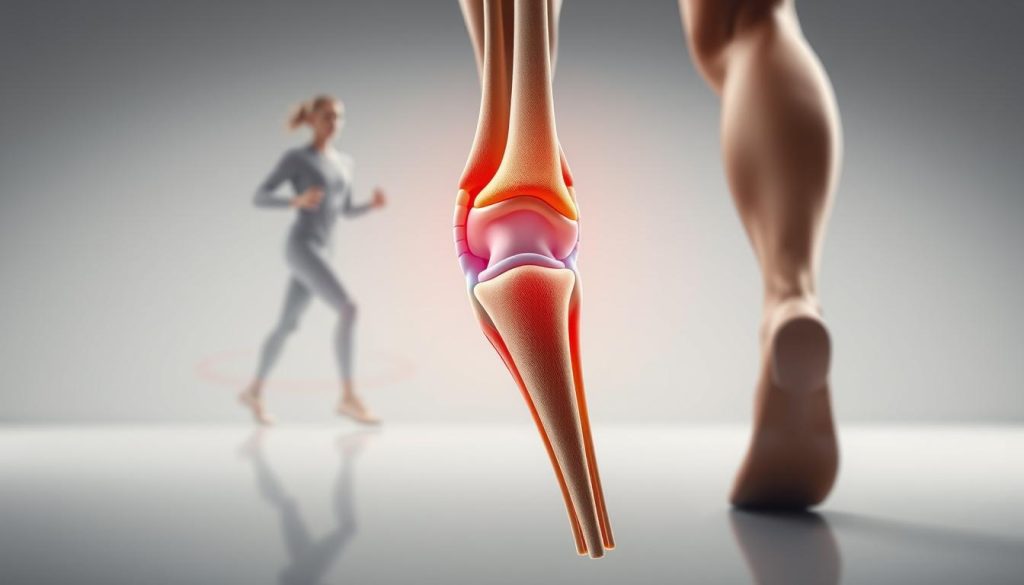
Footwear Selection for Knee Protection
The right footwear can play a significant role in reducing the impact on your knees while jumping rope. Shoes with good arch support and cushioning can help absorb some of the shock, reducing the strain on your knee joints. Look for shoes designed for high-impact activities or cross-training, as they typically offer better support and cushioning. Avoid minimalistic or flat shoes that can increase the impact on your knees.
Individual Factors: Weight, Age, and Previous Injuries
Individual factors such as body weight, age, and previous injuries also significantly influence how jumping rope affects your knees. Individuals with a higher body mass index (BMI) may experience more stress on their knee joints due to the increased impact. Age can also be a factor, as older individuals may have less resilient joints. Previous knee injuries can make your knees more susceptible to further strain from jumping rope. Being aware of these factors can help you tailor your jump rope routine to your individual needs and limitations.
By considering these factors and making appropriate adjustments, you can minimize the potential negative impacts on your knees and enjoy the many benefits of jumping rope.
Benefits of Jumping Rope for Overall Joint Health
Despite potential knee concerns, incorporating jump rope into your routine can have significant joint health benefits. Jumping rope is a comprehensive exercise that not only improves cardiovascular health but also strengthens the muscles around the joints, enhances balance and coordination, and contributes to better bone density and joint lubrication.

Building Supportive Muscles Around the Knee
Jumping rope strengthens the muscles around the knee, including the quadriceps, hamstrings, and calf muscles. These muscles play a crucial role in supporting and stabilizing the knee joint, thereby reducing the risk of injuries and improving overall knee health.
- Quadriceps strengthening helps in knee extension and stability.
- Hamstrings support knee flexion and provide additional stability.
- Calf muscles contribute to ankle stability, which in turn affects knee alignment.
Improving Balance and Coordination
Jumping rope requires and enhances balance and coordination, which are critical for maintaining proper knee alignment and preventing injuries. Improved balance reduces the risk of falls and strains on the knee joint.
Regular jump rope exercises can help improve neuromuscular coordination, making movements more efficient and less stressful on the joints.
Bone Density and Joint Lubrication Benefits
Jumping rope is a weight-bearing exercise that can help improve bone density, which is crucial for overall joint health. Better bone density reduces the risk of osteoporosis and fractures.
Additionally, the repetitive motion involved in jumping rope can help improve joint lubrication by stimulating the production of synovial fluid, which nourishes and lubricates the joints.
Proper Jumping Rope Technique to Minimize Knee Strain
Mastering the proper jumping rope technique is crucial for minimizing knee strain and enjoying the full benefits of this effective cardio workout. When done correctly, jumping rope can be a low-impact exercise that strengthens your legs and improves cardiovascular health without putting excessive strain on your knees.
Correct Landing Mechanics
One of the most critical aspects of jumping rope technique is how you land. Soft landing is key; you should aim to land midfoot or forefoot instead of heel striking, which can cause a shockwave up your leg and strain your knee joint. To achieve a soft landing, focus on keeping your knees slightly bent and your weight centered over your feet.
As noted by fitness expert Mark Verstegen, “Proper landing mechanics are essential for reducing the impact on your joints and maximizing the effectiveness of your workout.” This approach not only minimizes knee strain but also enhances your overall jumping technique.
Proper Jump Height and Intensity
The height of your jump and the intensity of your workout are also crucial factors in minimizing knee strain. Jumping too high can put unnecessary stress on your knees, while jumping too low may not provide an effective workout. Aim for a jump height of about 1-2 inches, just enough to clear the rope.
Intensity is another factor to consider. Start with a moderate pace and gradually increase your speed as you become more comfortable. As
“The goal is to find a rhythm that works for you, allowing you to maintain a consistent pace without overexerting your knees.”
This balanced approach helps in sustaining a long-term workout routine.
Common Technique Mistakes That Hurt Your Knees
Several common mistakes can lead to knee strain when jumping rope. These include:
- Jumping too high or with too much force
- Not bending your knees enough to absorb the impact
- Twisting or turning your knees in an unnatural way
- Not warming up properly before starting your jump rope session
By being aware of these potential pitfalls, you can adjust your technique to protect your knees and enjoy a safe and effective workout.
In conclusion, adopting the proper jumping rope technique is vital for minimizing knee strain. By focusing on correct landing mechanics, appropriate jump height and intensity, and avoiding common technique mistakes, you can enjoy the many benefits of jump rope exercise while protecting your knee health.
Who Should Avoid Jumping Rope?
While jumping rope is a great workout, certain individuals should exercise caution or avoid it altogether. Jumping rope can be strenuous on the body, particularly the knees. Understanding who should avoid this activity is crucial for preventing injuries.
Pre-existing Knee Conditions and Contraindications
Individuals with pre-existing knee conditions should be cautious when considering jump rope as a form of exercise. Conditions such as meniscal tears, ligament sprains, or osteoarthritis may be exacerbated by the repetitive impact of jumping. It’s essential for those with knee issues to consult with a healthcare professional before starting a jump rope regimen.
Other contraindications include severe knee pain, recent knee surgery, or chronic knee instability. In such cases, jumping rope could worsen the condition or prolong recovery. It’s always better to err on the side of caution when it comes to knee health.
Warning Signs That Jumping Rope Is Harming Your Knees
Even if you don’t have pre-existing knee conditions, it’s crucial to monitor your body’s response to jumping rope. Warning signs that jumping rope may be harming your knees include persistent pain, swelling, or stiffness after exercise. If you experience any of these symptoms, it’s a signal to reassess your routine.
Other warning signs include:
- Pain that doesn’t subside with rest
- Increasing pain over time
- Instability or feeling like your knee is going to give way
If you notice any of these signs, it’s advisable to stop jumping rope and consult a healthcare professional. They can help determine the cause of the issue and recommend alternative exercises or modifications to your jump rope technique.
Alternatives to Jumping Rope for Those with Knee Concerns
Those who need to avoid jumping rope due to knee issues can still enjoy a great workout with alternative low-impact cardio exercises. Jumping rope isn’t the only way to get a good cardiovascular workout, and there are several other options that can be just as effective without putting excessive strain on your knees.
Low-Impact Cardio Options
If you’re looking for low-impact cardio options, consider activities like swimming, cycling, or using an elliptical machine. These exercises provide an excellent cardiovascular workout without the high-impact stress that jumping rope can put on your knees.
Swimming is a great full-body workout that’s easy on the joints. Cycling, whether on a stationary bike or outdoors, is another effective way to improve cardiovascular health without high-impact stress. Elliptical machines offer a low-impact, weight-bearing workout that’s gentle on the knees.
Modified Jump Rope Techniques
For those who still want to incorporate jump rope into their routine, there are modified techniques that can reduce the impact on your knees. One approach is to focus on lighter, quicker jumps rather than high, bounding jumps. This can help minimize the stress on your knee joints.
Another modification is to alternate feet or perform “low jumps” where you don’t lift your feet far off the ground. These techniques can make jumping rope more knee-friendly while still providing a good workout.
Strength Training Exercises to Support Knee Health
Incorporating strength training exercises into your routine can help support knee health by building the muscles around your knee joint. Squats, lunges, and leg press exercises are effective for strengthening your quadriceps, hamstrings, and other supporting muscles.
Strengthening these muscles can help absorb some of the impact and reduce the strain on your knees during other exercises. It’s also beneficial to include exercises that improve flexibility and balance, further supporting overall knee health.
Building a Knee-Friendly Jump Rope Routine
A well-structured jump rope routine can help protect your knees while still delivering an excellent workout. To achieve this, it’s essential to consider several factors that contribute to a knee-friendly jump rope routine.
Progressive Training Plans for Beginners
For those new to jump rope, starting with a progressive training plan is crucial. Begin with short sessions (1-2 minutes) and gradually increase the duration as your body adapts. This gradual progression helps strengthen the muscles around your knees, improving their resilience to the impact of jumping.
- Start with 1-2 minutes of jumping, 3 times a week.
- Increase the duration by 30 seconds every week.
- Incorporate rest days to allow your knees to recover.
Warm-up and Cool-down Exercises for Knee Protection
Incorporating warm-up and cool-down exercises into your routine can significantly reduce the risk of knee injury. Before jumping, warm up with light cardio and dynamic stretching to prepare your muscles. After your session, cool down with static stretches to improve flexibility and reduce muscle soreness.
- Warm up with 5 minutes of light jogging or cycling.
- Perform dynamic stretches like leg swings and lunges.
- Cool down with static stretches focusing on your calves, hamstrings, and quadriceps.
Recommended Duration and Frequency
For a knee-friendly jump rope routine, it’s recommended to start with 2-3 times a week, with a total weekly duration of 10-15 minutes. As you progress, you can increase the frequency and duration, but always listen to your body and adjust accordingly.
Recovery Strategies Between Jump Rope Sessions
Adequate recovery is crucial for knee health. Ensure you’re getting enough rest between sessions, and consider incorporating recovery techniques such as foam rolling or self-myofascial release to help maintain knee health.
- Use foam rolling to release tension in your legs.
- Apply ice or heat as needed to reduce inflammation or relax muscles.
Conclusion
Jumping rope can be a fantastic way to improve cardiovascular health, but its impact on knee health is a concern for many. After examining the mechanics of jumping rope, scientific research, and expert opinions, it’s clear that the answer isn’t a simple yes or no.
A
summary of key points reveals that proper technique, surface considerations, and individual factors play a significant role in determining the impact of jumping rope on knee health. By understanding these factors and taking steps to mitigate potential risks, individuals can enjoy the benefits of jumping rope while protecting their knees.
For those who are concerned about the impact of jumping rope on their knees, there are alternatives and modifications that can be made. Low-impact cardio options, modified jump rope techniques, and strength training exercises can help support knee health. By being aware of the potential risks and taking proactive steps, individuals can make informed decisions about their exercise routines and maintain healthy knees.
In conclusion on jumping rope and knee health, it’s essential to weigh the benefits against the potential risks and take a balanced approach. With proper technique, awareness, and precautions, jumping rope can be a valuable addition to a well-rounded fitness routine.